Buckling Up Older Kids
Is your child ready for a seat belt?
One of the most common questions parents have is “When can my child ride in the car using just the adult seat belt?” Whether parents ask what is the law or what is safest for their child, our answer is always the same: “When the adult seat belt fits properly." That happens when you can answer YES to all five of these questions:
More...
If you answered NO to any of these questions, or if your child puts the shoulder portion of the seat belt under their arm or behind their back, your child needs a child restraint, such as a booster seat or high-weight harness seat, until the child can pass the 5-Step Test. Remember, use the 5-Step Test to check belt fit in every vehicle in which your child rides. Source: SafetyBeltSafe U.S.A.
When can my child ride in the front seat?
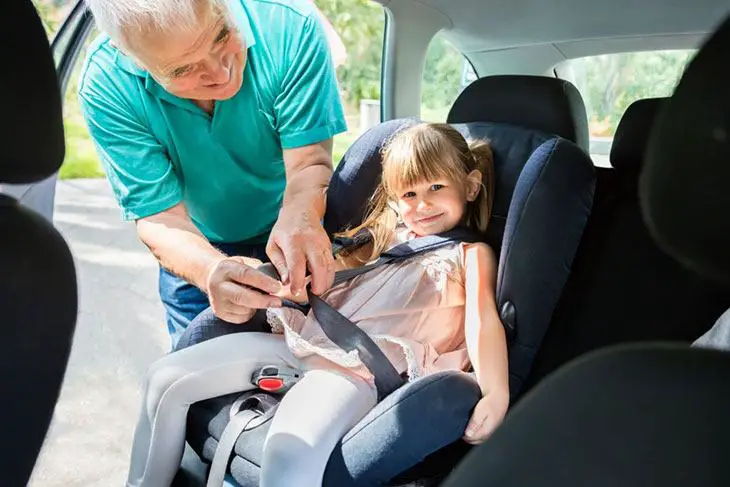
For example, Washington law requires children under 13 years old to ride in the back seat whenever it is practical to do so. What does "whenever it is practical to do so mean?" Click heret for a handout with some explanation.
Buckling Up Tweens, 8 – 12 Years Old
Tweens are developing habits that they will carry into their teen and adult years. Yet, they are needlessly at risk when riding in motor vehicles according to a 2006 study by the Automotive Coalition for Traffic Safety.
Did you know more than one tween passenger is killed in a motor vehicle crash every day (414 in 2004)? And three times as many tweens are injured (1,267 in 2004). Source: Fatality Analysis Reporting System
One major reason appears all too simple. Half of those who died were not wearing a seat belt and one third were sitting in the front seat. These tweens died not just because they got into crashes, they died because of where and how they were riding.
Tweens are in a time of transition — casting aside fantasy for reality — and paying more attention to peer pressure. One third of teens surveyed believed the back seat is safer, yet regularly still sit in front.
Research shows that children are 40% more likely to be injured in the front seat than if they had been seated in back. Source: Children’s Hospital of Philadelphia
So how do we keep tweens safely buckled in the back seat?
Here are some tips for parents:

For more information visit www.tweensafety.org.
Safe Seat Belt Use for Teens and Adults

Every passenger should always wear a seat belt! Even if the vehicle you’re riding in has one or more air bags, they won’t prevent you from being ejected from the vehicle, which was responsible for 28 percent of all car crash fatalities in 2006.*
*NHTSA Traffic Safety Facts 2006
Your seat belt will protect you from being thrown from the car. Air bags are designed to work with the seat belt as supplemental protection and they only work in some types of crashes. Seat belts spread crash forces across the strongest parts of our body—our hips and shoulders.
But in order to do this, the seat belt must be worn properly.
How should I wear my seat belt?
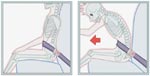
Poor Lap Belt Fit.
The lap belt is too high, up across abdomen.
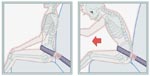
Better Lap Belt Fit.
But the upper body is still not restrained.
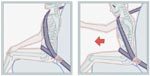
Best Protection is a Lap and Shoulder Belt.
Wear the belt snugly across the center of the shoulder and chest with the lap belt low across hips.
Why focus on buckling up?

*NHTSA Traffic Safety Facts Laws Jan. 2008
**WTSC Preliminary Data 2007
Safe Seat Belt Use for Senior Drivers
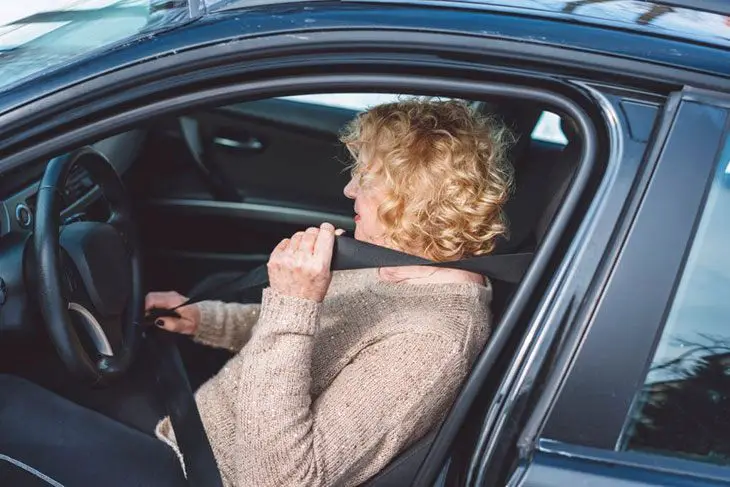
As we age our flexibility, bone density, vision, range of motion and strength change. This makes it all that more important that we’re buckled up properly in case of a crash. The lap portion of the seat belt should remain low across the hips and the shoulder belt should fall across the middle of the chest and shoulder. Never put the shoulder belt behind your back or under your arm where it can break your ribs.
It’s important to keep your chest at least 10 inches away from the steering-wheel airbag. This can be difficult to do as our stature begins to shrink as we age. Adjusting the backrest of the vehicle seat backwards can help.
For your comfort and safety it’s important to make your vehicle fit you as safely as possible before hitting the road. Here are a few items to check:
If you have any difficulty with any of these items, consult an occupational therapist for advice on adaptive devices.
Buckling Up During Pregnancy
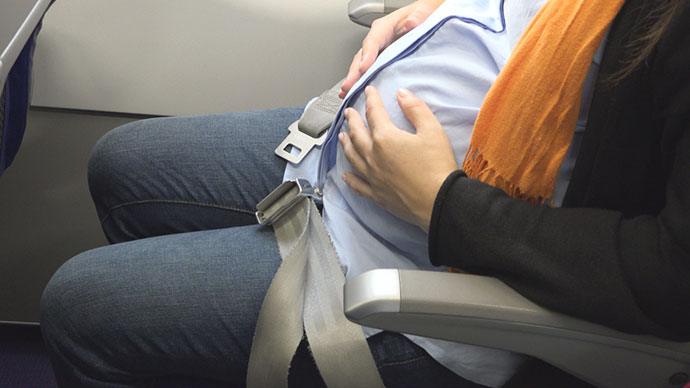
Research has determined that about one in every 25 pregnant women is involved in a police reported vehicle crash and approximately 17 percent of these soon-to-be-mothers weren't buckled up*.
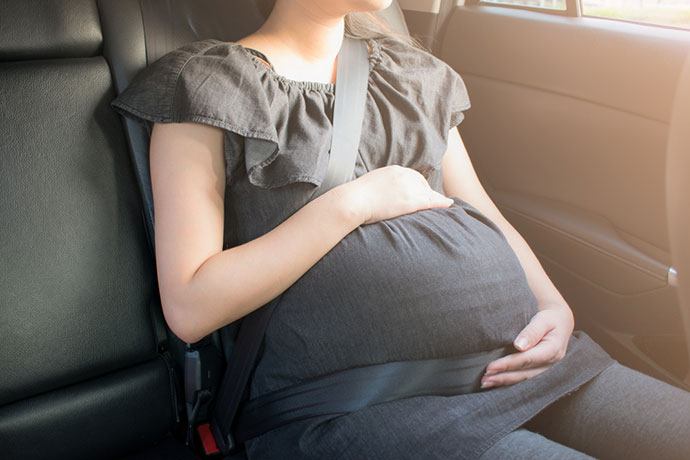
Doctors recommend you always wear your safety belt while pregnant because you are your baby’s first car seat.
*Center for Injury Research and Control University of Pittsburgh www.pregnantcrash.org
Wear your safety belt properly
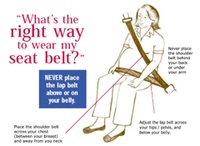
Push the lap part of the belt down low, under your abdomen. The shoulder belt should be across the center of the shoulder and chest.
Never place a safety belt under your arm or behind your back. Adjust your seat belt snugly. If you wear a heavy coat, open it and pull it to both sides, away from your belly.
Don’t disconnect the airbag
Doctors recommend pregnant women wear seat belts and leave the air bag on. The two systems work together to protect both you and your unborn child. Move your vehicle seat as far back as possible while still able to fully compress the gas and brake pedals.
Your breastbone should be at least 10 inches away from the steering wheel or dashboard. As your abdomen grows during pregnancy, move the seat back to keep as much distance as possible. Make sure all other occupants and objects are properly restrained.
Get yourself checked at the emergency department after any crash even a minor one. Your baby could be seriously hurt even if you do not seem injured.
To increase your safety
Reduce the time you spend in the car